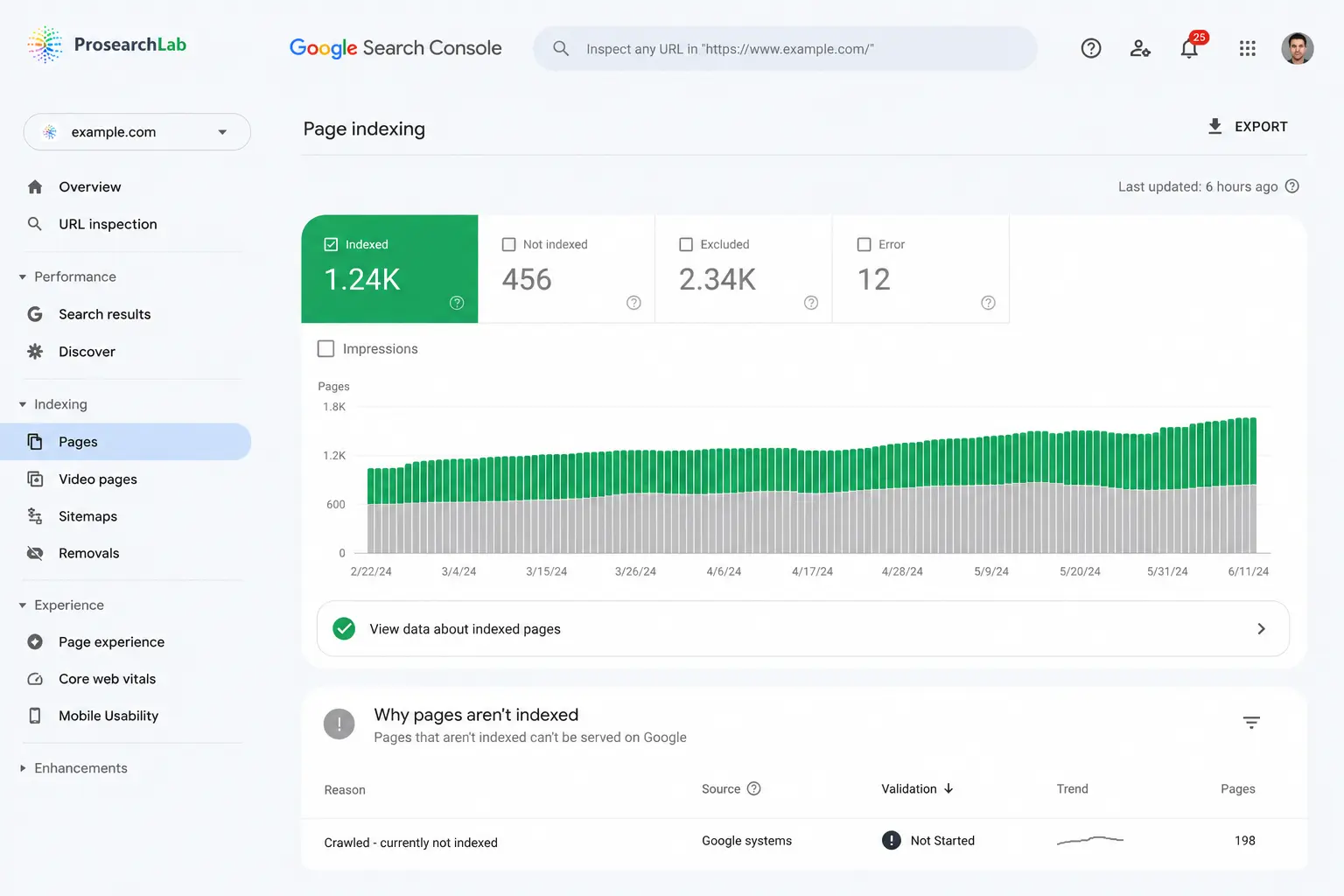
Indexing problems are rarely caused by one single issue. They usually come from a combination of technical signals, weak internal links, duplicate templates, thin content, poor crawl paths, or unclear page value. When the picture is broader than indexation alone, the best starting point is often a wider SEO audit that shows whether the root cause is technical, structural, or commercial.
Discovered but not indexed usually means Google knows the page exists but has not crawled or indexed it because crawl priority, site structure, internal linking, or page quality signals are weak. In many cases, that is also a technical SEO problem, not just an indexing problem.
Crawled but not indexed often points to quality, duplication, canonical, or intent mismatch issues where Google has seen the URL but decided it does not deserve a place in the index.
Important pages are often buried too far from the homepage, weakly linked, missing from key navigation paths, or disconnected from relevant content clusters that should support them. When those pages are commercial landing pages, the issue often overlaps with B2B SEO strategy as much as indexation itself.
Too many low-value pages can also compete for crawl attention when thin pages, duplicate templates, filter URLs, tag pages, or outdated content dilute the importance of your strongest URLs. This is one of the recurring patterns behind many of the situations we later document in case studies after cleanup work begins.