SEO Audit

SEO Audit

Find what is holding back organic growth across technical SEO, indexation, content, internal linking, competitors, and page-level conversion support. ProsearchLab turns scattered symptoms into a clear roadmap for what to fix first, where visibility is getting blocked, and what should come next.

What We Diagnose Before We Recommend Anything

Before a team needs recommendations, it usually needs a clearer diagnosis. The recurring patterns behind weak organic growth are rarely isolated to one tool warning or one underperforming page.

We audit how technical signals, page quality, internal links, site structure, competitors, and conversion paths interact on the same website, because that is usually where growth gets constrained.

The real problem is often not one error. It is several weaker signals combining into flatter rankings, weaker page priority, and lower lead value.

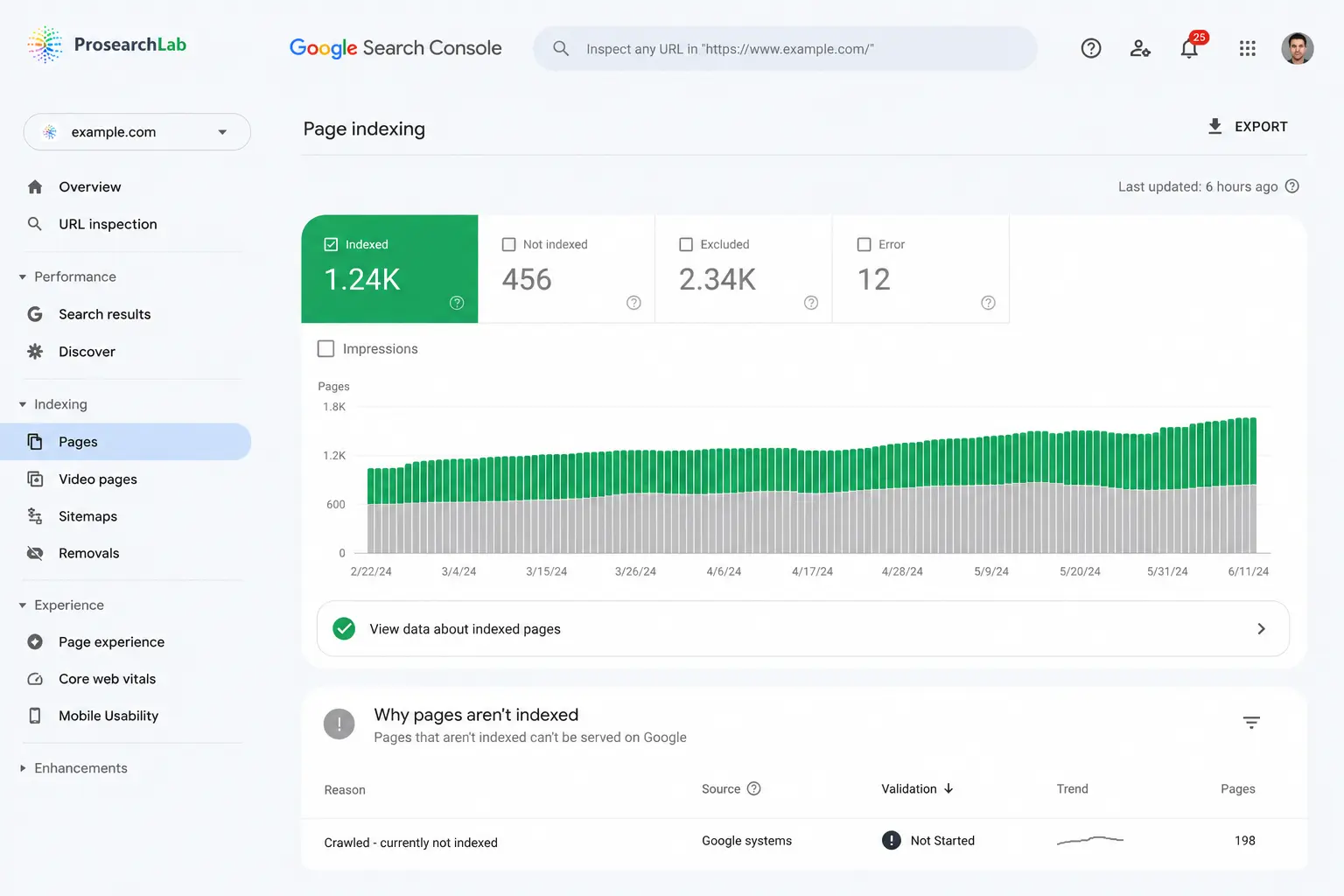
Google Search Console indexing report screenshot
SEO strategists reviewing search growth opportunities

Who This SEO Audit Is For

This service works best when your website already has business value but organic growth feels disconnected from that value. It is especially useful when the team knows the site has potential but does not yet know which SEO layer deserves the most attention.

The strongest fit is usually teams that already have content, service pages, or search visibility, but need a clearer diagnosis before investing further.

Typical cases include B2B companies with low organic visibility, service businesses that rely on lead generation, SaaS websites with feature or comparison pages, sites with GSC impressions but weak clicks, and websites preparing for redesign, migration, or content expansion.

What Our SEO Audit Covers

This is not a narrow technical checklist. The audit looks across the full organic growth system so you can see how technical signals, search intent, competitors, and conversion support interact on the same website.

1

Technical SEO & Crawlability

We review crawl paths, broken links, redirects, site architecture, Core Web Vitals, and mobile usability issues that can suppress visibility.

A clearer view of the technical blockers that limit crawling, interpretation, and page-level search performance.

2

Indexation & Sitemap Review

We analyze indexed pages, excluded pages, sitemap quality, canonical signals, crawl priority, and the URLs Google keeps devaluing.

A prioritized understanding of which pages deserve to be indexed, which ones are diluting value, and what signals need to change first.

3

Content & Search Intent Audit

We assess keyword targeting, page quality, outdated content, intent mismatch, and the gaps between what your site says and what searchers need.

A sharper diagnosis of where content exists but still fails to earn visibility, trust, or qualified clicks.

4

On-Page & Internal Linking Audit

We inspect title tags, headings, metadata, anchor text, orphan pages, and whether your most important pages receive enough structural support.

A more deliberate internal linking and page support plan around the URLs most likely to influence pipeline.

5

Competitor & SERP Opportunity Audit

We compare where competitors are stronger, what SERP patterns they benefit from, and which opportunities your site can realistically pursue.

A grounded sense of where organic growth is being won today and where your site can move with the least wasted effort.

6

Authority & Trust Signal Review

We review backlink profile, brand signals, author credibility, structured data opportunities, and the trust cues shaping performance.

A clearer picture of the off-page and trust layer that supports stronger rankings over time.

How Much Does an SEO Audit Cost?

The cost of an SEO audit depends on website size, technical complexity, number of templates, indexation issues, and how much competitor or content analysis is required. Smaller websites may need a focused audit, while larger B2B, SaaS, ecommerce, or programmatic websites usually require deeper investigation.

We scope pricing around what the website actually needs rather than force every business into the same audit format.

What We Often Diagnose in SEO Audits

The strongest SEO audit opportunities rarely come from one isolated warning. They usually appear as recurring patterns across technical signals, page quality, internal linking, and commercial visibility.

Recurring Pattern 01

Rankings are stuck on page 2-10

The site is visible enough to create impressions, but not structured well enough to break into stronger commercial positions.

Recurring Pattern 02

Important pages are not indexed

Key URLs stay excluded, deprioritized, or weakly supported even when they matter most to growth.

Recurring Pattern 03

Blog traffic does not become leads

Informational content attracts visits, but internal links, page flow, and commercial pathways fail to convert that attention.

Recurring Pattern 04

Competitors rank for buying-intent keywords

Other sites own the comparison, solution, and service searches that should support qualified demand.

Recurring Pattern 05

Technical issues keep recurring

Crawl waste, duplicate signals, weak templates, or low-value pages keep resurfacing because the underlying system stays unclear.

Recurring Pattern 06

You are not sure what to fix first

The real blocker is often not a lack of tactics. It is a lack of prioritization across technical, content, and page-level issues.

Our SEO Audit Process

We do not hand over a vague report and leave you to decode it. The audit is structured to move from diagnosis to a roadmap your team can actually use.

Step 1

Understand your business and goals

We start with the offer, ideal buyers, highest-value pages, and the organic outcomes the website should support.

Step 2

Review Google Search Console and analytics

We look at impressions, clicks, page performance, excluded URLs, and the visibility gaps hiding inside the current data.

Step 3

Crawl and inspect the website

The site is reviewed like a search engine would review it, across URLs, templates, internal links, redirects, and page structure.

Step 4

Evaluate technical, content, and internal linking issues

We isolate the signals that are suppressing discoverability, indexation, page clarity, and commercial support.

Step 5

Compare competitors and SERP opportunities

The audit checks where competitors are stronger and where your site can realistically gain leverage rather than chase noise.

Step 6

Prioritize findings by business impact

Not every issue deserves immediate action, so recommendations are grouped by impact, urgency, and implementation difficulty.

Step 7

Deliver an actionable SEO roadmap

The final output shows what to fix, why it matters, and how the work branches into technical SEO, indexation, or broader growth execution.

What You Receive From the Audit

The output is designed to help marketing teams and decision-makers move from ambiguity to action without turning the audit into an oversized report.

Deliverable

Executive diagnosis and priority issue list

A concise summary of what is suppressing organic performance, which pages deserve attention first, and where the biggest opportunities sit.

Deliverable

Technical, indexation, and structural findings

Clear findings across crawlability, indexing, sitemap quality, canonical signals, site architecture, and recurring technical blockers.

Deliverable

Content, internal linking, and page-level opportunities

Specific recommendations for intent alignment, internal linking, high-value page support, and the areas most likely to improve qualified visibility.

Deliverable

A roadmap your team can actually execute

Recommendations are organized by business impact so the next step is obvious whether you need technical SEO, indexation cleanup, or broader B2B growth work.

Where Audit Findings Usually Lead

A strong audit should create direction, not more noise. These adjacent services usually become the next step once the diagnosis is clear.

Next Step

Technical SEO

Go deeper into crawlability, canonicals, architecture, redirects, performance, and technical page structure when technical issues dominate the picture.

Next Step

Indexation SEO

Focus on discovered or crawled but not indexed pages, sitemap quality, canonical conflicts, and the structural signals blocking important URLs.

Next Step

B2B SEO

Move from diagnosis to growth strategy by aligning service pages, topic clusters, search intent, and buyer-focused lead generation.

SEO Audit FAQs

Answers to the questions users most often ask before starting a broader SEO diagnosis.

An SEO audit typically reviews technical SEO, crawlability, indexation, content quality, search intent alignment, internal linking, competitor visibility, on-page elements, and conversion opportunities. The goal is to identify what is blocking growth and prioritize what to fix first.
The timeline depends on the size and complexity of the website. A smaller service website may need a more focused review, while larger B2B, SaaS, ecommerce, or programmatic websites usually require deeper investigation across templates, data, and site structure.
Not always. We usually scope pricing around website size, technical complexity, template count, indexation issues, and how much competitor or content analysis is actually needed. That keeps the audit focused on the work your site requires instead of forcing every website into the same package.
Yes. An SEO audit looks at the full organic growth system, including technical SEO, content, search intent, internal linking, competitors, authority, and conversion opportunities. A technical SEO audit goes deeper into crawlability, indexation, canonicals, architecture, redirects, performance, and technical page structure.
Yes. Indexing problems are often one of the clearest symptoms an SEO audit uncovers. The audit helps identify whether indexing issues come from crawl barriers, duplicate signals, low-value pages, weak internal links, or poor page quality.
An audit itself does not improve rankings until the recommendations are implemented, but it gives you a much clearer path to improvement. The value comes from identifying the right priorities instead of spending time on low-impact changes.
In many cases, yes. If technical issues, weak page structure, unclear search intent, or internal linking problems are already limiting performance, publishing more content or building more links may not produce the results you want.

Need a Clear View of What Is Limiting Organic Growth?

Request an SEO Audit.

We help you understand where search performance is getting suppressed, which pages deserve attention first, and what type of SEO work should come next.

First Name
Last Name
your@company.com
Optional
yourwebsite.com
Tell us about your goals...
Min 10 chars0 / 2000
Protected by reCAPTCHA. Privacy & Terms.