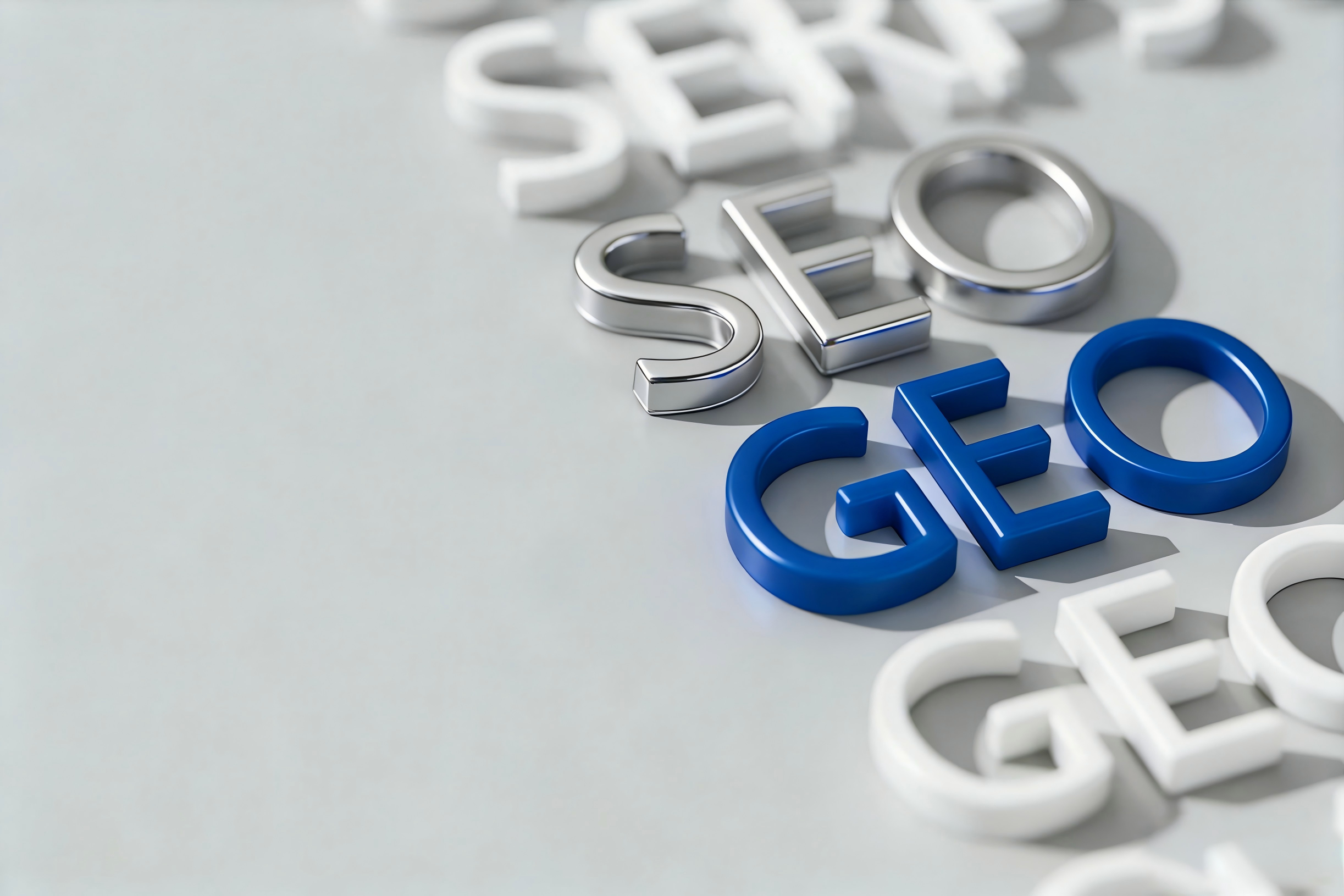
The digital marketing landscape continues to evolve rapidly, bringing new concepts and strategies that reshape how businesses approach online visibility. A new term has emerged in optimization circles: GEO, or Generative Engine Optimization. This development has sparked discussions about the relationship between traditional SEO and GEO, leading many to question whether SEO remains relevant or if GEO represents its replacement. This article explores both optimization approaches, examines their similarities and differences, and addresses the question of SEO's current status in digital marketing.
Understanding SEO and GEO
Search Engine Optimization (SEO) refers to the practice of improving website visibility in search engine results pages (SERPs). SEO involves optimizing various elements, including content quality, keyword usage, technical website structure, and link building, to help search engines understand and rank web pages effectively. Traditional SEO focuses on satisfying search engine algorithms, particularly Google's ranking factors. These include creating valuable content, ensuring fast loading speeds, building backlinks, and providing excellent user experience across all devices.
Generative Engine Optimization (GEO) represents a newer approach that focuses on optimizing content for AI-powered search experiences and generative AI tools. As AI chatbots and generative search features become more prominent, GEO aims to ensure content appears in AI-generated responses and recommendations. GEO considers how AI systems process, understand, and utilize content when generating answers for user queries. This optimization method adapts to the way AI tools synthesize information from multiple sources to create comprehensive responses.
Key Similarities Between SEO and GEO
Both optimization strategies share several fundamental principles:
- Content Quality Focus: Both SEO and GEO prioritize high-quality, informative content that addresses user needs and questions effectively.
- User Intent Understanding: Each approach requires a deep understanding of what users seek when they search or interact with AI tools.
- Technical Optimization: Both benefit from well-structured, accessible websites with clean code and fast loading times.
- Authority Building: Establishing expertise and credibility remains important for both traditional search engines and AI systems.
- Regular Updates: Both strategies require ongoing refinement as algorithms and AI models continue advancing.
Major Differences Between SEO and GEO
Despite their similarities, SEO and GEO differ in several important ways:
| Comparison Dimension | SEO | GEO |
|---|
| Target Platforms | Primarily targets traditional search engines like Google and Bing. | Focuses on AI chatbots, voice assistants, and generative search features. |
| Content Structure | Often emphasizes keyword density and traditional on-page elements. | Prioritizes conversational, contextual content that AI can easily process and synthesize. |
| Ranking Factors | Relies on established ranking signals like backlinks and domain authority. | Considers factors like content comprehensiveness, factual accuracy, and how well information can be extracted for AI responses. |
| Measurement Methods | Success is typically measured through organic traffic, rankings, and click-through rates. | Success might focus on AI citation frequency and inclusion in generated responses. |
| Optimization Techniques | Uses specific techniques like meta tags and schema markup. | Emphasizes structured information presentation and comprehensive topic coverage. |
Table 1: Differences between SEO and GEO across different comparison dimensions.
Is SEO Dead?
The short answer is no. SEO remains very much alive and continues serving as an important digital marketing component. Traditional search engines still process billions of queries daily, making SEO useful for businesses seeking online visibility. Google continues updating its algorithm and introducing new features, indicating ongoing investment in traditional search functionality.
Rather than replacing SEO, GEO represents an additional optimization that complements existing strategies. Many businesses find success by integrating both approaches, creating content that performs well in traditional search results and AI-generated responses.
The Future of Search Optimization
The optimization landscape appears to be moving toward a hybrid approach that combines SEO and GEO principles. Forward-thinking businesses are already adapting their strategies to include both traditional search optimization and AI-focused techniques.
If your organization plans to implement both SEO and GEO, you can start with these practical steps: First, you should create comprehensive, well-researched content that thoroughly addresses user questions and provides clear, factual information. You also need to structure the content in ways that both search engines and AI systems can easily understand and process. In this process, you should focus on building authority through demonstrating expertise rather than relying solely on technical optimization tricks. Besides, you need to monitor performance across both traditional search results and AI-powered platforms to understand what works best for your audience, and always stay informed about developments in both traditional search and AI-powered search technologies.
Frequently Asked Questions
Q: Should I stop doing SEO and focus only on GEO?
A: No. Both approaches serve different purposes and audiences. A balanced strategy that incorporates elements of both SEO and GEO typically produces better results than focusing exclusively on one method.
Q: How do I measure GEO success?
A: GEO measurement is still developing, but you can track mentions in AI-generated responses, monitor traffic from AI-powered search features, and assess how often your content appears in chatbot citations.
Q: Is GEO more difficult than SEO?
A: GEO presents different challenges rather than being inherently more difficult. While SEO has established best practices, GEO requires adaptation to rapidly evolving AI technologies and less predictable optimization factors. If you're confused about GEO, you can contact the ProsearchLab for further insights.
Q: Can small businesses benefit from GEO?
A: Yes. Small businesses can often compete effectively in AI-generated results by creating high-quality, comprehensive content about their local area or niche expertise.
Q: How quickly will GEO become mainstream?
A: GEO adoption will likely accelerate as AI-powered search features become more common. However, traditional SEO will remain important for the foreseeable future, making a combined approach most practical.
The relationship between SEO and GEO represents evolution rather than replacement. While GEO introduces new optimization considerations, SEO continues to deliver value for businesses seeking online visibility. SEO forms the foundation of GEO; mastering SEO is essential to further drive GEO. As AI continues to advance, businesses should adapt their optimization strategies to meet users' demands for information wherever they search.
References
- Google Search Central. (2026). Generative search and AI experiences. Google Developers. https://developers.google.com/search/docs/appearance/generative-ai
- Search Engine Journal. (2026). What is generative engine optimization (GEO)? Complete guide. https://www.searchenginejournal.com/generative-engine-optimization-geo/
- Ahrefs. (2025). GEO vs SEO: How to optimize for AI search engines. https://ahrefs.com/blog/geo-vs-seo/
- Moz. (2026). The rise of generative engine optimization. https://moz.com/blog/generative-engine-optimization
- Search Engine Land. (2025). Is SEO dead? Understanding GEO's impact on traditional search. https://searchengineland.com/seo-vs-geo-456789