Nowadays, traditional search engines are no longer the only way for people to search for information online. Search platforms driven by artificial intelligence are seizing market share and creating new opportunities for businesses. Just as traditional SEO is not sufficient, SEO service companies like ProsearchLab have also launched AI SEO Services.
The Rise of AI Search Platforms
AI search has transformed how users interact with information online. Unlike traditional search engines that display a list of links, AI search platforms provide direct answers and conversational responses. This shift represents a fundamental change in user behavior and search preferences.
Market Share and Usage Statistics
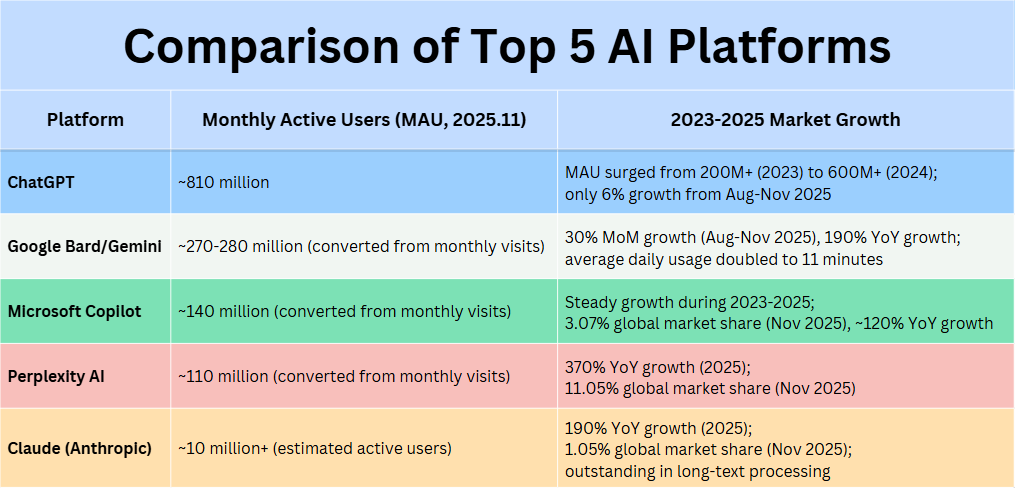
The following table shows the current market presence of major AI search platforms:
Figure 1: Comparison of Top 5 AI Platforms.
These numbers demonstrate why businesses need to optimize for AI search. The growth rates indicate this trend will continue expanding in the coming years.
Building Authoritative and High-Quality Content
AI platforms place significant emphasis on content that demonstrates genuine expertise and authority within a given field. To meet these standards, creators should focus on producing original research and presenting unique data that offers fresh perspectives to readers. Rather than skimming the surface of topics, comprehensive coverage that addresses subjects in depth tends to perform better with AI systems. Incorporating insights from industry professionals adds credibility and value to your content. Additionally, maintaining a regular update schedule ensures that information remains current and relevant to your audience's needs.
Adapting to Natural Language Processing
Modern AI search platforms excel at interpreting natural language patterns, which requires a shift in how content is crafted. Writing in a conversational tone that mirrors everyday speech helps AI systems better understand and categorize your content. Using question-based headings that reflect the actual queries users type into search engines improves discoverability. Long-tail keywords should be woven naturally throughout your text rather than forced into awkward placements. Logical information structure with clear connections between ideas also helps AI systems follow and interpret your content more effectively.
Leveraging Structured Data
Structured data serves as a roadmap that helps AI systems interpret and categorize your content accurately. Implementing Schema markup for various content types, including articles, products, and services, provides essential context. The FAQ schema proves particularly valuable for sections containing question-and-answer formats. Organization and author markup help establish credibility and expertise signals. Breadcrumb navigation contributes to a clearer content hierarchy that both users and AI systems can follow.
Developing Strategic Topic Clusters
AI platforms are adept at recognizing relationships between different pieces of content on your website. Creating topic clusters involves developing comprehensive pillar pages that serve as authoritative resources for main industry topics. Supporting content should connect back to these pillar pages through strategic internal linking. This approach demonstrates topical depth and helps AI systems understand the breadth of your expertise across related subject areas.
Optimizing for Featured Snippets
Featured snippets often serve as primary information sources for AI platforms when generating responses. To improve your chances of being featured, answer common questions directly and concisely at the beginning of relevant sections. Bullet points and numbered lists make information easier for AI systems to extract and present. Including relevant statistics and data points adds value and specificity. Clear headings and subheadings throughout your content help organize information in a way that AI can easily parse.
Technical Considerations for AI Search Optimization
Page speed and overall performance play a crucial role in how AI crawlers evaluate websites. Fast loading times across all devices, optimized images and media files, efficient hosting solutions, and streamlined code without unnecessary plugins all contribute to better AI visibility. Mobile optimization remains equally important, as mobile-first indexing extends to AI search platforms. This means websites should feature responsive layouts that adapt to various screen sizes, readable text without requiring users to zoom, and intuitive touch navigation. Content accessibility also matters significantly for both AI systems and human users. Clear heading structures using H1, H2, and H3 tags help AI understand content hierarchy, while alt text for images, video transcripts, and descriptive link text improve overall content comprehension.
Measuring Success in AI Search
Evaluating the effectiveness of AI search optimization requires tracking several key metrics. Citation rates indicate how frequently AI platforms reference your content in their responses, while brand mention frequency reveals how often your brand appears in AI-generated answers. Traffic quality metrics help assess user engagement from AI-driven visits, and content performance analysis shows which topics generate the most AI citations. Monitoring these indicators provides valuable insights into your optimization efforts and helps identify areas for improvement.
Frequently Asked Questions
Q: How long does it take to see results from AI search optimization?
A: Results typically appear within 2-3 months of implementing optimization strategies. However, this varies based on content quality, competition, and platform algorithms.
Q: Do traditional SEO techniques still work for AI search?
A: Yes, many traditional SEO principles remain relevant. High-quality content, proper technical implementation, and user experience continue to be important factors.
Q: Should I optimize for all AI platforms or focus on specific ones?
A: Start with the platforms most relevant to your target audience. Google's AI features and ChatGPT are good starting points for most businesses.
Q: How do I know if my content is being used by AI platforms?
A: Monitor brand mentions across AI platforms, track referral traffic, and use tools that identify when your content appears in AI responses.
Q: Will AI search replace traditional search engines?
A: AI search will likely complement rather than completely replace traditional search. Both serve different user needs and search intents.
Q: What types of content perform best in AI search results?
A: Educational content, how-to guides, expert analysis, and data-driven articles tend to perform well. Content that directly answers specific questions is particularly effective.
Conclusion
AI search optimization represents the next frontier in digital marketing. By focusing on high-quality content, natural language optimization, and cutting-edge technology, businesses can gain an edge. As these platforms continue to evolve, companies that implement AI search optimization early will hold an advantage. Contact the ProsearchLab to get a head start on AI search optimization.
References
- AWISEE. (2025). AI search ranking factors in 2026. https://awisee.com/blog/ai-search-ranking-factors/
- WebFX. (2026). AI ranking factors: A guide to improving your visibility. https://www.webfx.com/blog/seo/ai-ranking-factors/
- Search Engine Journal. (2026). The 2026 AI search benchmark every SEO leader needs. https://www.searchenginejournal.com/ai-search-benchmark-every-seo-leader-needs/561301/
- Uniquelogic. (2026). AI ranking factors in 2026: What impacts SEO performance. https://uniquelogic.com/ai-ranking-factors-2026/