For traditional manufacturers, the website is often treated as a digital brochure—static, outdated, and invisible to anyone who doesn't already know the company name.
We recently worked with a specialized manufacturer in the industrial component sector. They faced a classic problem: they had decades of offline reputation and a catalog of high-value products, but their digital presence was practically non-existent.
Their internal team assumed the market was simply "too niche" for SEO. They believed that engineers and procurement managers weren't searching for their specific components online.
Our data proved otherwise. The search demand was there; the website just wasn't equipped to capture it.
The Technical Barrier
Before discussing keywords or content, we had to address the structural issues that were rendering the site invisible.
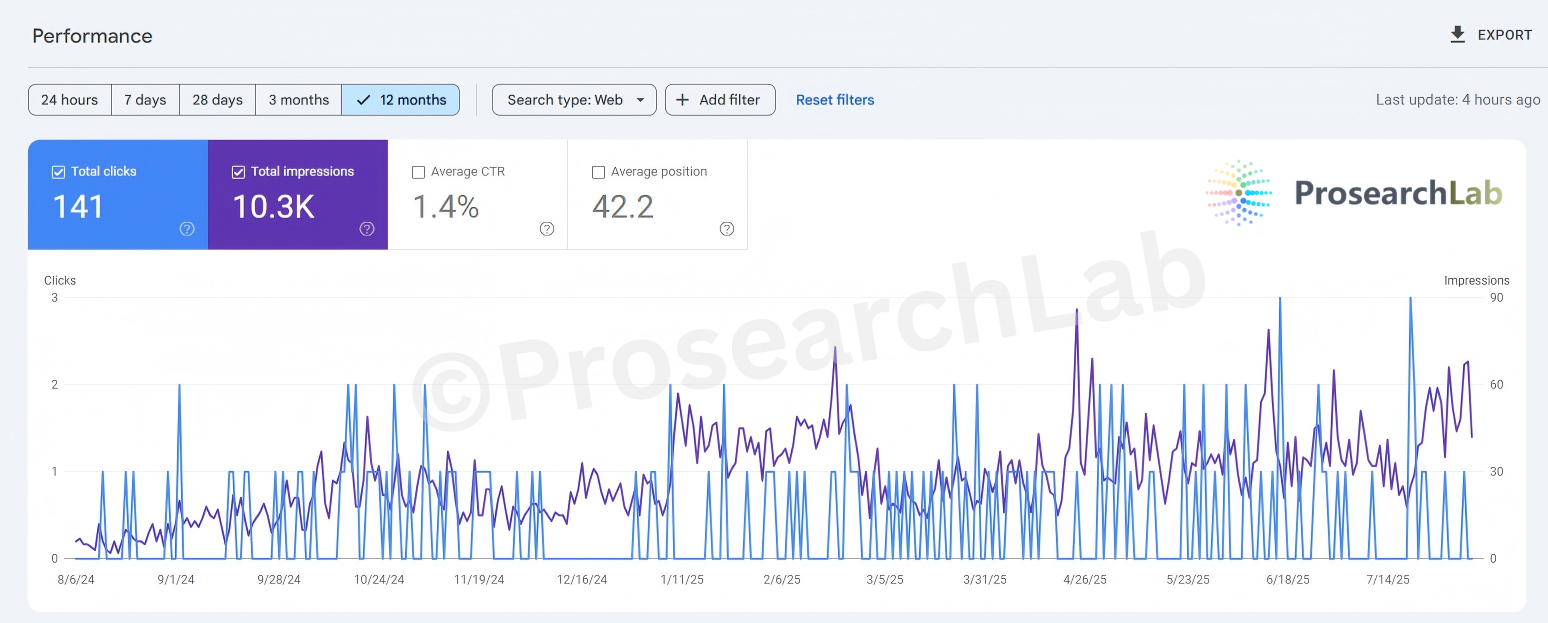
When we onboarded the client, our initial audit revealed why their traffic flatline (as seen in the early months of the chart below) was happening. The site suffered from severe crawlability issues. A legacy CMS structure was generating thousands of low-quality, duplicate URL parameters that exhausted Google’s crawl budget. Essentially, Google was spending time crawling junk pages instead of the core product catalog.
Our first move wasn't writing blog posts. It was a technical remediation:
- We restructured the site architecture to flatten the hierarchy, making product pages easier for crawlers to reach.
- We implemented proper canonicalization to consolidate link equity.
- We fixed a chain of critical rendering issues that prevented search engines from reading the product specifications.
Aligning with Engineering Intent
Once the technical foundation was stabilized, we shifted focus to relevance.
The client’s original content was written using internal part numbers and strict industry jargon that only their existing customers knew. However, potential new clients—engineers at the research phase—were searching for functional terms and problem-based queries (e.g., “high-temperature seal failure causes” rather than “Model X-500”).
We reworked the core product pages to bridge this gap, incorporating the actual terminology used by engineers during their discovery process. We didn't just stuff keywords; we restructured the content to answer technical questions immediately, matching the high intent of the user.
The Data: Quality Over Quantity
Figure 1: GSC performance report showing the breakthrough moment in Q1 after resolving critical crawl budget waste and re-indexing the core product pages.
The graph above illustrates the impact of this foundational work over a 12-month period.
The first few months show the status quo: near-zero visibility. As the technical fixes were deployed and indexed (around January/February), we see the initial lift in impressions (purple line).
By the second half of the year, the site established a consistent growth trajectory. While 10.3k impressions and 141 clicks might seem modest compared to high-volume B2B SaaS or e-commerce metrics, context is vital here.
In this specific manufacturing niche, a single qualified lead can represent a contract value in the tens of thousands. These 141 clicks aren't casual browsers; they are users specifically searching for specialized industrial solutions.
This case study demonstrates that even in "boring" traditional industries, SEO is not about chasing viral traffic. It is about technical precision—ensuring that when a qualified buyer searches for a solution you provide, your site is technically capable of showing up.